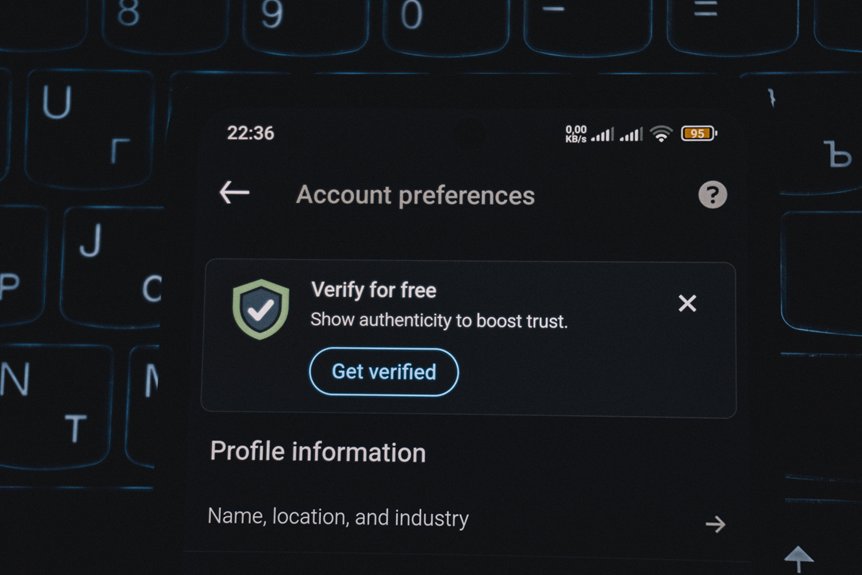
Trusting a user or device without verification is a thing of the past. Zero Trust is a security framework designed to protect your organization by continuously verifying identities and access. It focuses on real-time monitoring and dynamic controls. This approach significantly reduces the risk of breaches.
Key components of Zero Trust include identity verification, access controls, and continuous monitoring. These principles translate into practical strategies that enhance your security landscape.
Continuous User Identity Verification
Maintaining continuous user identity verification is key for securing your network. You can’t rely solely on initial login credentials. Threats can emerge at any moment, making it necessary to validate users throughout their sessions.
By implementing continuous verification, you monitor user behavior and access patterns in real time. If anything seems off, like accessing sensitive data from an unfamiliar location, you can trigger additional authentication measures.
This proactive approach protects sensitive information and builds trust within your organization. It’s about ensuring the right people are inside at all times.
Prioritizing continuous identity verification keeps your network resilient against potential attacks.
Dynamic Access Control Mechanisms
Dynamic access control mechanisms adapt in real time to changing contexts and user behaviors. This approach ensures access is granted based on current conditions, such as location, device security status, and user activity.
For instance, if an employee logs in from an unfamiliar location, the system might require additional verification steps. By continuously evaluating these factors, dynamic mechanisms enhance security while maintaining user experience.
This flexibility allows for faster responses to potential threats and reduces the risk of unauthorized access. Implementing these mechanisms helps maintain a more resilient security posture.
Essential Security Technologies
As organizations embrace the Zero Trust model, understanding security technologies becomes important for effective implementation. These technologies help establish a security framework that continuously verifies all users, devices, and activities.
Here are five key components:
Identity and Access Management (IAM) guarantees only authorized users can access sensitive resources.
Multi-Factor Authentication (MFA) adds layers of security by requiring multiple forms of verification.
Endpoint Security protects devices from threats and vulnerabilities.
Network Segmentation limits access to specific parts of the network, reducing exposure.
Security Information and Event Management (SIEM) provides real-time analysis of security alerts and incidents.
Integrating these technologies will enhance your organization’s security posture.
Data Breach Prevention Strategy
Organizations must adopt a proactive strategy to prevent data breaches. Start by implementing strict access controls. Ensure only authorized users can access sensitive data.
Regularly update and patch systems to close vulnerabilities that cybercriminals may exploit. Conduct employee training to raise awareness about phishing and other security threats.
Monitor network activity continuously for unusual behavior. This allows for a quick response to potential breaches.
Utilize encryption to protect data both at rest and in transit. This makes it harder for attackers to access valuable information.
Establish an incident response plan to minimize damage when breaches occur. This ensures your organization remains resilient in the face of cyber threats.
Case Study: Financial Sector
Applying Zero Trust principles can enhance security in the financial sector.
Organizations face real-world challenges during implementation. They employ effective risk mitigation strategies.
This case study highlights how these practices protect sensitive data and maintain customer trust.
Zero Trust Principles Applied
The financial sector faces constant threats from cybercriminals aiming to exploit sensitive data.
Implementing Zero Trust means you verify every user and device accessing your network, regardless of location. Use multifactor authentication to ensure only authorized personnel access critical systems.
Continuous monitoring of user behavior helps detect anomalies and potential breaches in real-time. By segmenting your network, you limit access to sensitive areas. This reduces the risk of an internal compromise.
Adopting these principles safeguards your assets and builds trust with your clients.
Real-World Implementation Challenges
Implementing Zero Trust in the financial sector presents challenges.
Balancing security needs with user experience is difficult. Legacy systems resist integration with modern security protocols. Employees often find constant verification processes cumbersome. This can lead to frustration and reduced productivity.
Educating staff on new security practices takes time. Compliance with regulations adds complexity. Security measures must align with industry standards.
Managing third-party access is tricky. You need to verify and monitor external vendors without hindering operations.
Addressing these challenges can enhance security without sacrificing user experience.
Risk Mitigation Strategies Employed
Financial institutions adopting Zero Trust principles employ various risk mitigation strategies to bolster security without compromising efficiency.
Micro-segmentation limits access to sensitive data based on strict user verification. Continuous monitoring enables real-time threat detection and response. Multi-factor authentication (MFA) adds an extra layer of protection, ensuring only authorized users gain access.
Regular audits and assessments help identify vulnerabilities before exploitation. By integrating artificial intelligence, institutions can automate threat analysis and streamline incident response.
These strategies safeguard critical assets while maintaining operational agility in an evolving threat landscape.
Misunderstanding Zero Trust’s Complexity
Many organizations misinterpret Zero Trust security as an overly complex framework.
In reality, it simplifies security by ensuring every user and device is continuously verified.
Consider a clear set of policies for access control.
Consistent monitoring of user behavior is necessary.
Segmentation of your network limits exposure.
Automated responses to suspicious activities enhance security.
Integration of existing security tools improves efficiency.
Integration With Identity Management
Integrating Zero Trust security with identity management enhances security posture. Continuous and context-aware identity verification limits access to sensitive resources to authenticated users.
Implement multi-factor authentication (MFA) and role-based access controls (RBAC) to actively verify user identities.
Synchronizing identity management systems with your Zero Trust framework allows you to track user behavior and access patterns in real-time. If anomalies arise, quickly adjust permissions or revoke access.
This proactive approach minimizes risk and streamlines compliance with regulatory requirements. Effective integration fosters a culture of security where every access request is scrutinized, reinforcing your organization’s defenses.
Key Principles of Zero Trust
Integrating identity management into your security strategy helps you understand the key principles of Zero Trust. Zero Trust assumes threats can exist both inside and outside your network. Here are the principles to know:
| Principle |
Description |
| Verify Identity |
Always authenticate users and devices. |
| Least Privilege |
Limit access to only what’s necessary. |
| Assume Breach |
Continuously monitor for unusual activity. |